Introduction
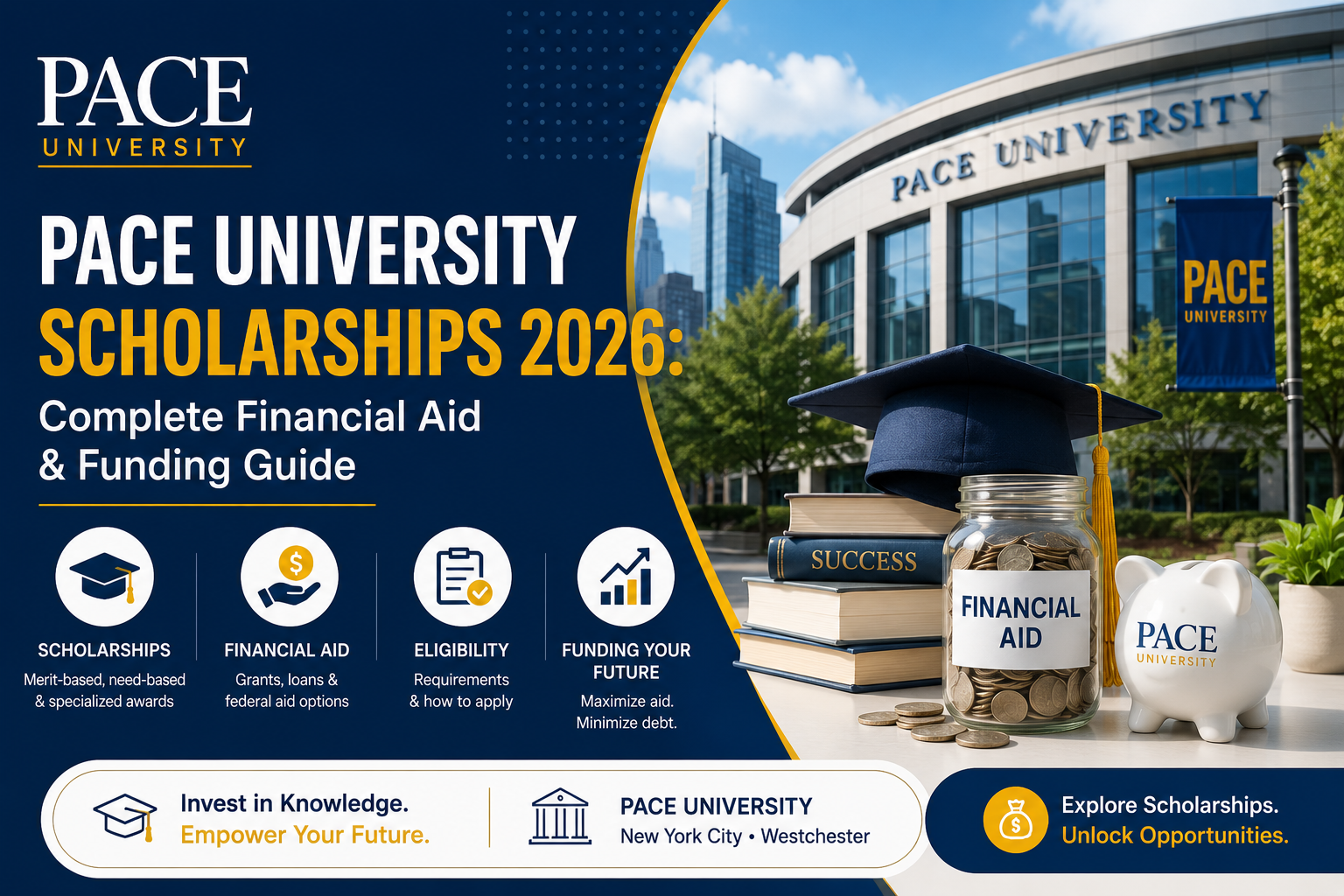
Pace University Scholarships 2026: Complete Financial Aid & Funding Guide For many students and families, the biggest question about college is not where to attend—it is how to pay for it. While academic programs, campus life, and career opportunities are important factors, affordability often plays a decisive role in the college selection process.
Fortunately, Pace University offers a variety of scholarships, grants, and financial aid opportunities that can significantly reduce educational expenses. Whether you are a first-year student, transfer applicant, international student, or graduate student, understanding available funding options can help make a Pace education more affordable.
This comprehensive guide explains the different types of scholarships available at Pace University, how financial aid works, eligibility requirements, application strategies, and practical ways to minimize out-of-pocket costs.
Understanding the Cost of Attendance at Pace University
Before exploring scholarship opportunities, students should understand the overall cost of attendance.
College expenses typically include more than tuition alone.
Direct Educational Costs
These costs are billed directly by the university and may include:
- Tuition
- Student fees
- Technology fees
- Program-specific fees
Indirect Educational Costs
Students should also budget for:
- Housing
- Transportation
- Textbooks
- Personal expenses
- Health insurance
- Supplies
Because educational costs can add up quickly, scholarships and financial aid often become essential components of a student’s financial plan.
What Types of Financial Aid Does Pace University Offer?
Financial aid comes from several different sources.
Many students receive a combination of scholarships, grants, loans, and work-study opportunities.
Major Categories of Aid
| Financial Aid Type | Repayment Required? |
|---|---|
| Scholarships | No |
| Grants | No |
| Federal Loans | Yes |
| Private Loans | Yes |
| Work-Study Programs | No |
| Employer Assistance | No |
Understanding these differences helps students prioritize funding sources that do not require repayment.
Merit-Based Scholarships at Pace University
Merit scholarships reward students for academic achievement and leadership accomplishments.
Unlike loans, these awards generally do not require repayment.
Who Qualifies for Merit Scholarships?
Admissions offices often evaluate:
- High school GPA
- Academic rigor
- Leadership experience
- Community involvement
- Special achievements
Students with strong academic records may automatically be considered for certain scholarship opportunities during the admissions process.
Benefits of Merit Scholarships
Merit awards can:
- Reduce tuition costs
- Lower student loan debt
- Improve college affordability
- Reward academic excellence
Because funding is limited, competitive applicants often benefit from applying early.
Need-Based Financial Aid
Need-based aid helps students whose families demonstrate financial need.
Eligibility is generally determined through financial aid applications and supporting documentation.
Why Need-Based Aid Matters
Many students who might otherwise struggle to afford college gain access to higher education through financial assistance programs.
Need-based aid can include:
- Federal grants
- Institutional grants
- State grants
- Supplemental educational funding
Federal Financial Aid and FAFSA
One of the most important steps in securing financial aid is completing the Free Application for Federal Student Aid (FAFSA).
What Is FAFSA?
FAFSA is the primary application used to determine eligibility for:
- Federal grants
- Federal student loans
- Work-study programs
- Some institutional aid programs
Students who fail to submit FAFSA may miss significant financial assistance opportunities.
Information Needed for FAFSA
Applicants typically need:
- Tax records
- Income information
- Social Security numbers
- Family financial information
Submitting FAFSA early often improves access to limited funding sources.
Federal Grants Available to Eligible Students
Federal grants are among the most valuable forms of financial aid because they generally do not require repayment.
Pell Grants
Pell Grants assist students with demonstrated financial need.
Benefits include:
- No repayment requirement
- Direct support for educational expenses
- Broad eligibility among undergraduate students
Supplemental Educational Opportunity Grants
Some students may qualify for additional federal grant funding beyond Pell Grants.
Funding availability often depends on financial need and institutional allocations.
Scholarships for International Students
International students frequently ask whether scholarship opportunities are available to them.
While funding options may differ from those available to U.S. citizens, many international students still receive financial assistance.
Benefits for International Applicants
Scholarships can help reduce:
- Tuition expenses
- Living costs
- Educational fees
Because international funding opportunities may be competitive, students should begin researching scholarship options as early as possible.
Transfer Student Scholarships
Transfer students represent a significant portion of the Pace University community.
To support these students, scholarship opportunities may be available for those transferring from community colleges or other institutions.
What Transfer Scholarships Often Consider
Admissions offices may evaluate:
- College GPA
- Academic performance
- Leadership experience
- Community involvement
Students who have performed well academically at previous institutions often have stronger scholarship opportunities.
Graduate Student Financial Aid
Graduate education represents a major investment in career development.
Fortunately, graduate students may have access to various funding sources.
Common Graduate Funding Options
Graduate students often pursue:
- Employer tuition reimbursement
- Federal student loans
- Scholarships
- Assistantships
- Professional organization funding
Because graduate aid varies significantly by program, students should research options specific to their field of study.
Work-Study Opportunities
Work-study programs allow eligible students to earn money while attending school.
Advantages of Work-Study
Students can:
- Gain professional experience
- Earn supplemental income
- Build workplace skills
- Reduce borrowing needs
Many students find work-study positions particularly valuable because they provide both financial and career-development benefits.
Employer Tuition Assistance Programs
Many employers support workforce education through tuition assistance programs.
Why Students Should Explore Employer Benefits
Employer-sponsored education can:
- Reduce educational expenses
- Lower student debt
- Support career advancement
Employees should contact their human resources departments to determine whether tuition assistance benefits are available.
How to Increase Your Chances of Receiving Scholarships
Scholarship competition can be significant, especially for merit-based awards.
Fortunately, students can improve their chances by taking a strategic approach.
Maintain Strong Academic Performance
Grades remain one of the most important scholarship criteria.
Students should focus on:
- Consistent academic achievement
- Challenging coursework
- Strong study habits
Apply Early
Many scholarship programs have limited funding.
Early applicants often receive greater consideration.
Highlight Leadership Experience
Scholarship committees frequently value leadership activities such as:
- Student organizations
- Volunteer work
- Community service
- Athletic leadership roles
Write Strong Scholarship Essays
Effective essays often:
- Tell a personal story
- Demonstrate goals
- Highlight achievements
- Show genuine motivation
Common Scholarship Application Mistakes
Avoiding mistakes can significantly improve scholarship outcomes.
Missing Deadlines
Late applications are often disqualified automatically.
Submitting Generic Essays
Scholarship reviewers prefer authentic and personalized responses.
Ignoring Small Scholarships
Many students focus only on large awards.
However, multiple smaller scholarships can collectively provide substantial financial support.
Incomplete Applications
Students should carefully review requirements before submission.
How Much Financial Aid Can Students Receive?
Financial aid packages vary significantly depending on:
- Financial need
- Academic performance
- Enrollment status
- Scholarship availability
- Federal eligibility
As a result, no two financial aid packages are exactly alike.
Students should review award letters carefully and compare all available funding sources.
Building a College Financing Strategy
Successful students often combine multiple funding sources.
Sample Financial Aid Strategy
A student may use:
- Merit scholarship
- Federal Pell Grant
- State grant
- Work-study income
- Family contribution
This approach can significantly reduce borrowing requirements.
Is Pace University Worth the Investment?
The value of any university depends on individual goals, academic performance, and career outcomes.
Many students choose Pace University because of:
- New York City location
- Internship opportunities
- Career-focused programs
- Strong employer connections
- Diverse student population
When combined with scholarships and financial aid, these benefits can improve the overall return on educational investment.
Conclusion
Paying for college can seem overwhelming, but understanding Pace University scholarships and financial aid opportunities can make the process far more manageable. From merit-based scholarships and federal grants to work-study programs and employer tuition assistance, students have access to numerous resources that can help reduce educational expenses.
The key to maximizing financial aid is preparation. Students who apply early, maintain strong academic records, complete FAFSA promptly, and actively pursue scholarship opportunities often receive the most favorable financial aid packages.
With careful planning and a proactive approach, a Pace University education can become significantly more affordable while providing access to valuable academic and career opportunities.