
Introduction
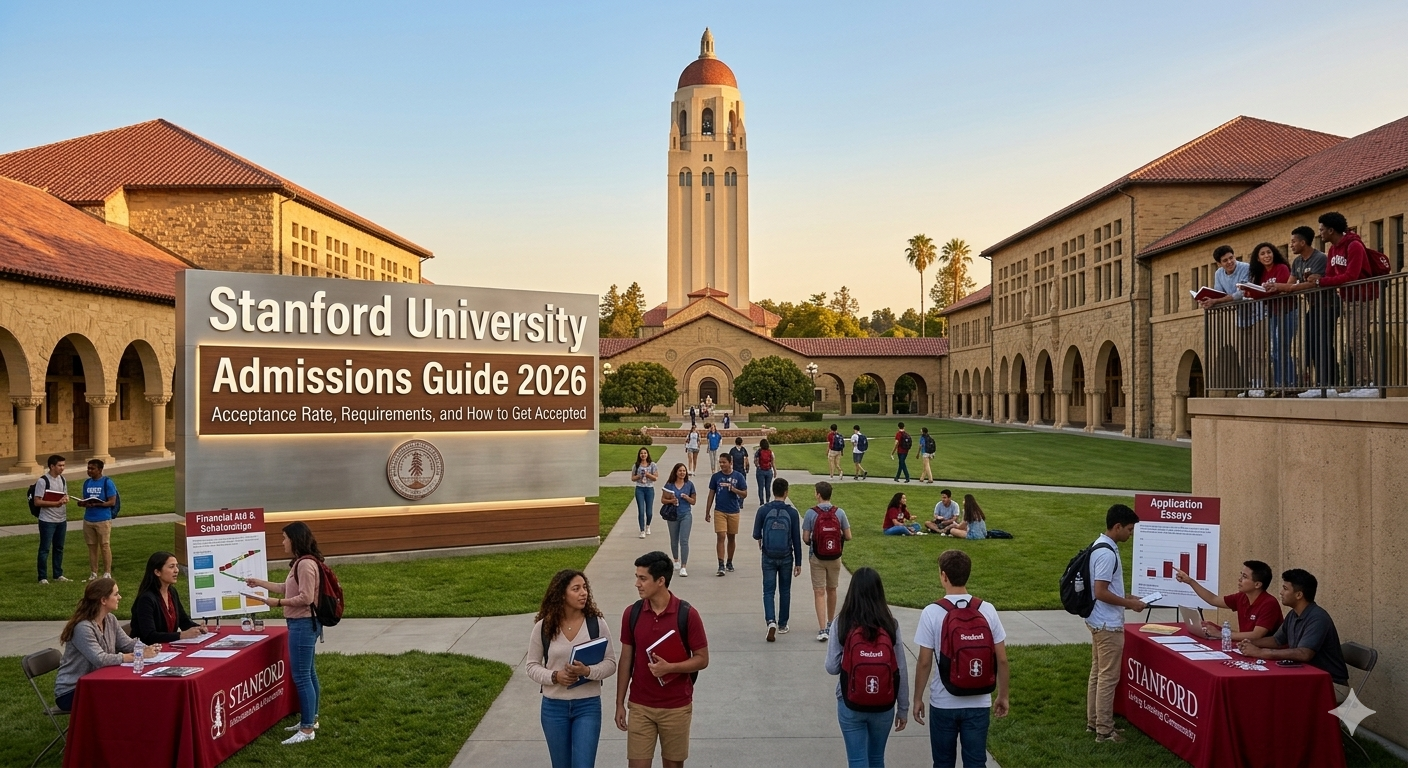
Stanford University Admissions Guide 2026: Acceptance Rate, Requirements and How to Get Accepted Stanford University is widely regarded as one of the most prestigious and competitive universities in the world. Located in the heart of Silicon Valley, Stanford has built a global reputation for academic excellence, innovation, entrepreneurship, and groundbreaking research. The university attracts some of the brightest students from across the United States and around the globe, making its admissions process one of the most selective in higher education.
Every year, tens of thousands of students apply to Stanford with hopes of securing a place in its incoming class. However, only a small percentage receive admission offers. Because competition is so intense, applicants must demonstrate much more than strong grades and test scores. Stanford seeks intellectually curious students who have shown leadership, initiative, creativity, and a commitment to making a positive impact in their communities.
If you are planning to apply in 2026, understanding the admissions process is essential. This guide covers Stanford University’s acceptance rate, GPA expectations, standardized testing considerations, application requirements, essays, extracurricular activities, and practical strategies to help you build a stronger application.
Why Stanford University Is One of the Most Selective Universities
Stanford consistently ranks among the top universities in the United States and worldwide. Its academic reputation, research opportunities, distinguished faculty, and proximity to leading technology companies make it one of the most sought-after institutions for ambitious students.
Several factors contribute to Stanford’s selectivity:
- Global academic reputation
- Strong research opportunities
- World-class faculty
- Entrepreneurial culture
- High graduate success rates
- Extensive alumni network
- Silicon Valley connections
Because of these advantages, Stanford receives far more qualified applications than it can accommodate.
Stanford University Acceptance Rate
One of the most searched admissions-related questions is:
“What is Stanford University’s acceptance rate?”
Stanford’s acceptance rate typically remains among the lowest in the country, reflecting the university’s highly competitive admissions environment.
What a Low Acceptance Rate Means
A low acceptance rate does not mean only perfect students are admitted. Instead, it means that Stanford receives applications from many outstanding students and must make difficult decisions based on a holistic review process.
Applicants should understand that:
- High grades alone are not enough
- Test scores do not guarantee admission
- Leadership and impact matter
- Essays play a major role
- Personal qualities are carefully evaluated
Even exceptionally qualified students may not receive admission offers because of the intense level of competition.
Stanford’s Holistic Admissions Process
Unlike institutions that rely heavily on numerical metrics, Stanford evaluates applicants through a holistic admissions process.
The admissions committee reviews every application individually and considers the complete picture of each student.
Key Factors Stanford Evaluates
Academic Performance
Academic achievement remains one of the most important components of an application.
Admissions officers review:
- GPA
- Course rigor
- Academic trends
- Class performance
- Intellectual engagement
Students should demonstrate consistent excellence throughout high school.
Standardized Testing
Testing policies may change from year to year, so applicants should review the latest admissions guidelines before applying.
When submitted, test scores are evaluated within the broader context of the application.
Extracurricular Activities
Stanford values students who pursue meaningful activities outside the classroom.
Admissions officers look for:
- Leadership
- Commitment
- Initiative
- Community impact
- Personal passion
Personal Essays
Essays allow applicants to present their voice, experiences, and perspectives.
Strong essays often reveal:
- Authenticity
- Self-awareness
- Intellectual curiosity
- Personal growth
Letters of Recommendation
Recommendations help admissions officers understand how students perform in academic and community settings.
GPA Requirements for Stanford University
Many students ask whether Stanford has a minimum GPA requirement.
The university does not publish a specific GPA cutoff. However, admitted students generally have exceptional academic records.
Building a Competitive Academic Profile
Strong applicants typically demonstrate:
- Consistently high grades
- Challenging coursework
- Academic initiative
- Strong performance across multiple subjects
Because Stanford attracts top-performing students, applicants should aim to maximize academic rigor whenever possible.
Importance of Course Rigor
Admissions officers evaluate not only grades but also the difficulty of courses taken.
Students should challenge themselves through opportunities such as:
- Advanced Placement (AP)
- International Baccalaureate (IB)
- Honors courses
- Dual-enrollment programs
Strong performance in rigorous classes signals readiness for Stanford’s demanding academic environment.
SAT and ACT Expectations
Standardized testing remains an important topic among applicants.
Although policies may vary, competitive applicants often perform exceptionally well on national assessments.
What Stanford Looks For
Admissions officers evaluate testing within the context of:
- Academic performance
- School resources
- Educational opportunities
- Personal background
A strong test score can support an application, but it is only one part of the overall review.
Stanford’s Emphasis on Intellectual Vitality
One of the unique aspects of Stanford’s admissions process is its focus on intellectual vitality.
What Is Intellectual Vitality?
Intellectual vitality refers to a student’s genuine enthusiasm for learning and discovery.
Examples include:
- Independent research
- Personal projects
- Academic competitions
- Creative pursuits
- Entrepreneurial initiatives
Stanford seeks students who are naturally curious and motivated to explore ideas beyond classroom requirements.
Extracurricular Activities That Stand Out
Many applicants mistakenly believe they need dozens of extracurricular activities to impress admissions officers.
In reality, Stanford values depth more than quantity.
Quality Over Quantity
Strong applicants often demonstrate:
- Long-term commitment
- Leadership growth
- Community impact
- Meaningful achievements
Rather than joining numerous organizations, students should focus on activities that genuinely matter to them.
The Role of Stanford Application Essays
Essays are among the most important parts of a Stanford application.
They provide opportunities to showcase qualities that transcripts and test scores cannot reveal.
What Makes a Great Stanford Essay?
Successful essays often:
- Tell a compelling story
- Demonstrate reflection
- Reveal personality
- Highlight growth experiences
- Show authentic passion
Admissions officers value honesty and originality over attempts to sound impressive.
Stanford University Restrictive Early Action
Applicants may have the option to apply through Restrictive Early Action.
Benefits of Early Action
Applying early can provide:
- Earlier admissions decisions
- Additional planning time
- Demonstrated interest
However, students should carefully review all restrictions associated with this application option.
International Student Admissions
Stanford welcomes students from around the world and values diverse perspectives within its community.
Additional Requirements for International Students
International applicants may need to provide:
English Language Proficiency Scores
Accepted exams may include:
- TOEFL
- IELTS
- Duolingo English Test
Academic Credential Evaluation
Applicants may need to submit academic records according to university requirements.
Financial Documentation
Certain financial information may be required during the admissions process.
Common Reasons Applicants Are Not Admitted
Because Stanford receives applications from many outstanding students, admissions decisions can be highly competitive.
Common challenges include:
- Limited available spaces
- Weak essays
- Lack of demonstrated impact
- Insufficient academic rigor
- Generic extracurricular profiles
Rejection often reflects the competitiveness of the applicant pool rather than a student’s overall potential.
Expert Tips to Improve Your Chances of Admission
Although no strategy guarantees admission, students can strengthen their applications by focusing on several key areas.
Prioritize Academic Excellence
Strong grades remain essential.
Challenge Yourself Academically
Take the most rigorous courses available while maintaining strong performance.
Pursue Meaningful Activities
Focus on quality and impact rather than quantity.
Write Authentic Essays
Admissions officers want to understand who you are beyond your achievements.
Seek Strong Recommendations
Choose teachers who know your abilities and character well.
Demonstrate Curiosity
Explore interests through projects, research, or independent learning opportunities.
Is Stanford University the Right Fit for You?
Before applying, students should consider whether Stanford aligns with their goals and interests.
Stanford may be an excellent fit if you:
- Enjoy intellectual challenges
- Value innovation and creativity
- Want access to research opportunities
- Thrive in collaborative environments
- Seek entrepreneurial experiences
The strongest applicants are often those who can clearly articulate why Stanford aligns with their personal and academic aspirations.
Conclusion
Stanford University remains one of the most competitive and respected institutions in the world. Its admissions process seeks students who combine academic excellence with curiosity, leadership, initiative, and a desire to contribute meaningfully to society.
While gaining admission is challenging, understanding Stanford’s expectations can help applicants prepare stronger applications. By focusing on rigorous academics, authentic personal storytelling, meaningful extracurricular involvement, and thoughtful preparation, students can present themselves as compelling candidates.
Ultimately, Stanford is not simply looking for students with impressive achievements—it is looking for individuals who will contribute to the university community and create meaningful impact long after graduation.